Copyright

Protected by Copyscape Duplicate Content Software You will copy with risks to penalties and criminal procedures.
Showing posts with label Bay Area events. Show all posts

Tuesday, April 22, 2025

Badal Sircar and the Revolution of Third Theatre

In the annals of Indian theater, few names evoke as much reverence, innovation, and disruption as Badal Sircar. A playwright, director, and performer, Sircar (1925–2011) wasn’t just an artist—he was a movement. His most groundbreaking contribution to Indian theater came in the form of what he termed the Third Theater—a radical shift away from the proscenium stage, expensive productions, and bourgeois sensibilities. In a country teeming with socio-political contradictions, Sircar's vision was both urgent and revolutionary.

The Making of a Theater Maverick
Born in Calcutta in 1925, Sircar was trained as a civil engineer and later studied town planning in London. But it was in the alleyways of Indian cities and the pulse of working-class struggles that he found his true calling. His early plays, like Ebong Indrajit (1963), were still rooted in Western theatrical structures, but already hinted at a deeper restlessness—a yearning to speak more directly to the Indian experience, and more importantly, to the Indian people.

What Is Third Theater?
Sircar’s Third Theater was a deliberate break from both First Theater (rural, folk, traditional theatre) and Second Theater (Western-influenced, proscenium stage of the city theatre ). The Third Theater was minimalist, mobile, and people-centric. It was meant to decolonize the stage and bring performance to the people—on street corners, in villages, on the steps of a public building.

Gone were the elaborate sets, artificial lighting, and ticketed shows. In their place came bare stages, raw performances, and collective participation. His troupe, Satabdi, performed in open spaces with simple props and a commitment to honesty and social relevance.

Theater of Resistance
Badal Sircar’s plays tackled subjects few dared to touch. He questioned blind patriotism in Bhoma, dissected the emptiness of urban existence in Michhil (The Procession), and unflinchingly portrayed violence, displacement, and class struggle. For Sircar, theater was not just entertainment—it was a tool of resistance, a mirror to society, and a space for dialogue.

He often said, “Theater should belong to people. If people do not come to the theater, the theater must go to the people.”

Language, Movement, and Innovation
A hallmark of Sircar’s Third Theater was its physical expressiveness. Inspired in part by traditional Indian forms and contemporary global movements (like Grotowski’s Poor Theater), his actors used body, space, and rhythm in innovative ways. Language was important, yes—but gesture, breath, and ensemble carried as much weight.

This democratization of performance also extended to audience interaction. In many of his street performances, the line between actor and spectator blurred, and engagement became visceral and immediate.

Legacy and Contemporary Resonance
Badal Sircar may have left us in 2011, but his spirit lives on in every socially engaged performance staged under open skies or in community halls. His influence can be seen in the work of countless theater groups across India—from Jana Natya Manch in Delhi to street theater collectives in Kerala, Bengal, and beyond.

At a time when commercialism often threatens to dilute meaningful art, Sircar’s vision reminds us that theater can—and should—be radical, accessible, and real.

Final Curtain, Eternal Impact
Badal Sircar did not just write plays. He rewrote the relationship between theater and society. In giving birth to Third Theater, he gave India a people’s stage, where every performance was a protest, every actor a comrade, and every audience member a witness to truth.

More than a director, he was a people’s dramaturg, choreographing empathy, dissent, and hope.

“Theater is not in the building. It is in the body, in the breath."

**

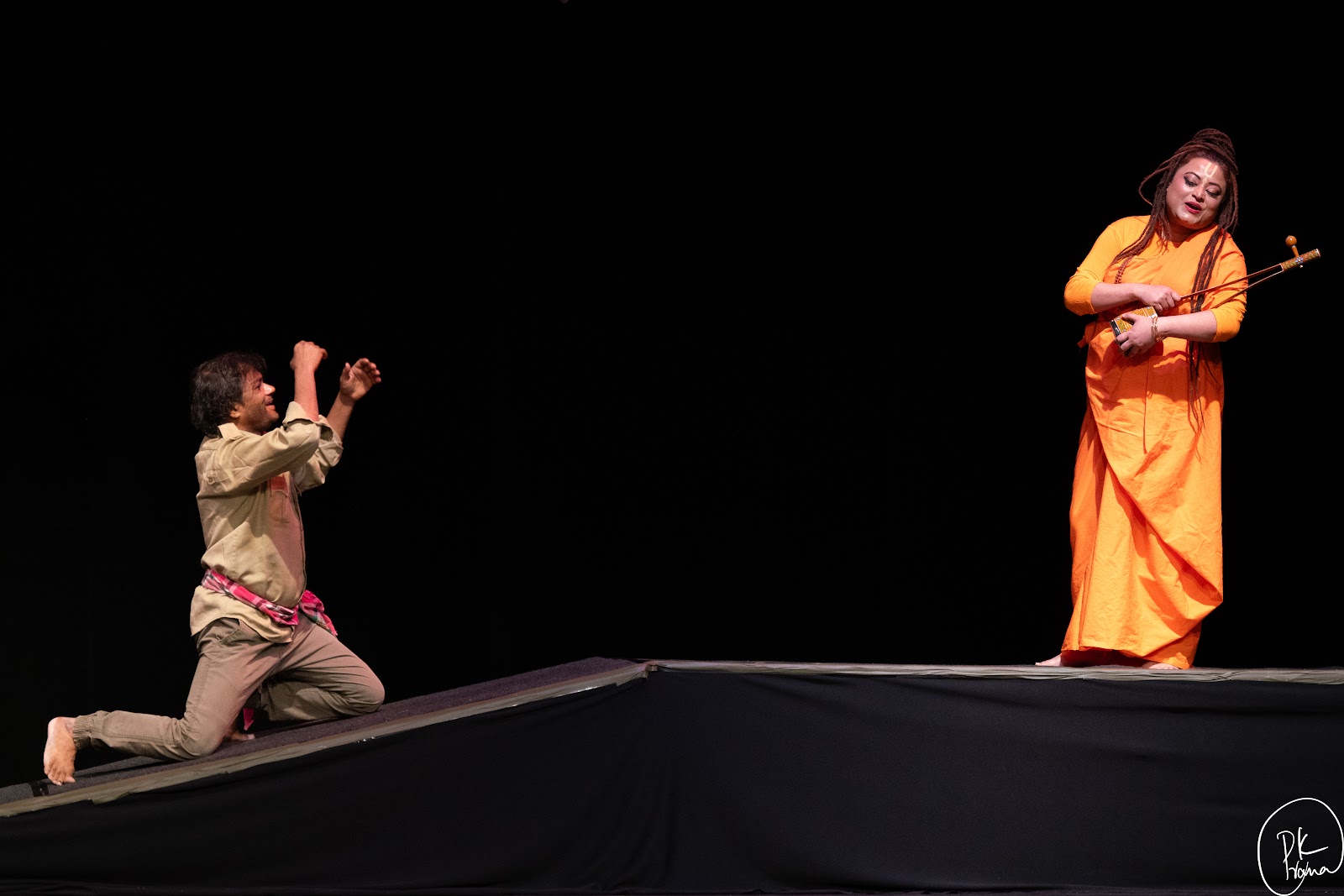
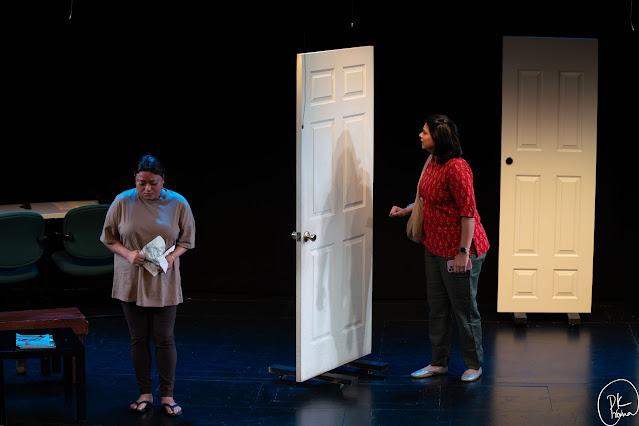
 At Bay Area Bengali Natyamela 2025, I will perform with Team Yatraa to pay homage to some of Badal Sircar's most famous works. Please join us on June 14, 2025, in Union City, CA.

Tickets available at: https://www.tugoz.com/events/sanskriti/natyamela-2025 

Please use the referrer code Bodhi-Yatraa to support our team.

Wednesday, August 07, 2024

Kittonkhola - a transformative experience

Some things in life transform you in ways that you never imagined. Some time in March, I had auditioned for a role in Kittonkhola (while still rehearsing for Chini, my stage debut, directed by Raj Ray, founder of Yatraa). 

I received an email from BAAT saying that I had been selected, and the kickoff meeting for the entire cast was scheduled for March 8th at 9 pm PST online on Google Meet with Partha Pratim Deb (PPD) and his wife Rupa Deb from Kolkata. The idea was that we would be cast via virtual meetings, read our lines online once a week with Partha Da and Rupa di (on Thursdays), rehearse in person (on Fridays), and then, when PPD arrived, we would have daily rehearsals from May 9th to the day of the show. (Memorial weekend- May 25 and 26 at Spangenberg Theatre, Palo Alto)

It would be difficult, and I was rethinking before committing to such a rigorous rehearsal schedule. There were a lot of unknowns- 

  • How long would the daily rehearsals be, 
  • How far was the location for the rehearsal going to be, and 
  • Was my character duration on stage worth the effort I would put in?

I got all my answers in due time. 

The original "Kittonkhola" is a legendary drama written by the renowned playwright Selim Al Deen (সেলিম আল দীন), set in rural Bangladesh, and delves deep into the duality of joyous rural cultures and life’s harsh realities.  As homework, I decided to watch a movie adaptation and found that the script we were reading lines from was a lot different from the movie storyline.

PPD adapted the script and made some adjustments to accommodate actors like me into the script. For example, there is no love triangle between Shonai (played by PPD), Banashree Bala (played by Rupa Deb), and Dalimon (played by Pinka Di) and there was no one named Anandi Amma (my character) in the original script either. What struck me most was how accurately PPD had cast each character just by meeting us online. 


Scenes from the May 25 Performance 


My first day of rehearsal with PPD

The eagle had landed, and we were all excited to meet him. I had offered my house as the rehearsal location, and there were both pros and cons. The pros were that I could be in the comfort of my house and act as the occasional host, even though everyone took turns bringing in dinner and helping clean up later. The cons were that we had to clean up every day after rehearsals, and it was no small offering. My husband Sangram seemed more excited than me, ensuring everyone felt at home.

 Celebrating Anindya Da's birthday after rehearsal 
I remember feeling so good 😊 

I realized that I was experiencing a great bonding exercise. I have made friends for life, and I will do everything possible to help them out if needed. Even now, when I chance upon them, I feel good to see them. We take a lot of goofy "Kittonkhola" cast pictures at every social event, be it the 10th Anniversary of Dishari Public Library or Bay Area Band Fest- there are always familiar faces to greet and hug you.


Some of the amazingly talented people I met during Kittonkhola


So, yes, the answer to my question- was it worth reducing your social life to zero and committing to rehearsing for the plays from 7 to 11 pm on weekdays, having a full-time job, and then rehearsing again from 10 am to 6 pm on weekends? Totally.

This has also allowed me to push myself and be surprised by what I am capable of both physically and mentally. 

The biggest takeaway was probably from the June 1 and 2 workshops with Partha Da and Rupa Di. We learned a folk song, did improv acting, and even developed a skit called "The Merchant of Venice of Bay Area"- a modern-day take on the Shakespearean version. I lost my marbles almost when I got to redo the courtroom scene. We had that in the syllabus for ICSE English Literature when I graduated in my Sophomore year. And this time, I got to play Portia instead of Antonio. ;) 

Sometimes, you have to wait 24 years to play your dream role. 

Returning to the workshop, two fun-filled days were an extension of my learning experience. But what stayed with me were the lines both Partha Da and Rupa di hammered into our brains- loosely translated - 

"Theater is an aesthetic (নান্দনিক) art

Your body is a part of that aesthetic. How you present yourself on stage will influence your audience.

If you are overweight, slow to move, and low on energy, your audience will sense that too and you will fail to entertain them to the fullest."

Without fat-shaming, they managed to tell us why you should not let yourself go.

I am lazy, and I always have more potential than kinetic energy.  But I decided to change that. They are several years our senior, but the way they move with energy, how they started rehearsing the very day they landed in San Francisco  after traveling long hours of international flights from Kolkata, and how they always impressed us by being prime examples of vitality themselves is what I will remember the most about my "Kittonkhola" experience. 

Yes, I learned more about acting, voice projection, and scales. But most importantly, I learned to take better care of myself—so much so that my boss noticed my visible change in energy level. I do feel better, and I hope I will continue this growth. Movement is life.


Wednesday, April 10, 2024

"Chini" from SnapShorts, a Yatraa production

A few stills from the Yatraa production SnapShorts

The first act" চিনি" was adapted from an award-winning mini-play “Sugar” by Jennifer O’Grady

Director: Raj Ray

Co-actor: Tiya Mukherjee

PC: Pranav Koundinya


Monday, February 26, 2024

TRIPTI Saraswati Pujo 2024

The legacy of Tripura continues in the heart of Silicon Valley, California.

Tripti, an organization based in the Bay Area, California, diligently upholds our state's traditions, culture, and customs even in the United States of America.

      With most of the attendees in this group picture  PC: Rajat Naha

For the fourth time since 2019, over 100+ Tripti members (connected to Tripura either by birth or through marriage) congregated to observe Saraswati Puja at Centerville Community Center, Fremont, in February 2024. 

In the shadow of today’s humdrum, many traditional rituals have faded. Still, our customs have endured across time and distance, and even after thousands of miles of migration, our roots remain strong. This is also an effort for the parents to expose the next generation to the culture we grew up in and to remember where we came from because we believe that the stronger the roots, the higher the tree will be.


Our MVP (Most Valuable Purohit) Tirtha

The celebration also included traditional puja by our in-house purohit, art exhibitions of rare photos depicting the history of Tagore and Tripura, craft booths manned by children teaching their origami skills to other children, and an open mic for children and adults. And, of course, khichuri bhog, makha prasad, and other offerings from the members.


Vintage Banner design by me

 
Srila di, our Program Director, sharing credits for those who helped us materialize this


Participants at the end of our program. The rehearsals have been a great bonding exercise.

During this year’s celebration of Baag Devi Saraswati, we presented a musical showcase with an amalgamation of song-dance-narration-recitation titled "Chiro Shakhyota," symbolizing the timeless connection between Gurudeb Rabindranath Tagore and Tripura.

Our beloved Maharaja Birchandra Manikya of Tripura, a connoisseur of literature, found inspiration in Tagore's verses. Tagore's visit to Tripura and his creation of literature and songs inspired by the landscapes and history of Tripura were an integral part of the program. Tripti members have worked tirelessly to honor this historical legacy. 

Today, Tripura's children around the globe actively engage in preserving our heritage, history, and culture. Our future is in good hands.

There was also an open-mic hosted by me

Thursday, October 19, 2023