Copyright

Protected by Copyscape Duplicate Content Software You will copy with risks to penalties and criminal procedures.
Showing posts with label art inspirations. Show all posts

Friday, August 16, 2024

The murals of Lompoc

A tiny town named Lompoc

Lompoc, pronounced /ˈlɒmpoʊk/ LOM-poke, is a city in Santa Barbara County on California's Central Coast. As of July 2021, the city had a population of 43,834. About half of Santa Barbara, which was 87,533 in the census of 2022. Santa Barbara itself is considered a small town. Compare it to the population of San Francisco 808,437 (2022)or San Jose 971,233 (2022)


For a visual comparison, here is a horizontal graph for you

History

The area has a rich history, with the Chumash people inhabiting it for thousands of years. They named the area "lumpo'o̥," which translates to "in the cheeks" in the local Purisimeño language. The Spanish later renamed it Lompoco after Fermín de Lasuén established Misión La Purísima in 1787. In 1837, the land became part of the Rancho Lompoc land grant under Mexican rule. After the U.S. took control of California, several settlers acquired land in the Lompoc Valley, including William Welles Hollister. Hollister sold the land surrounding the mission to the Lompoc Valley Land Company, which established a temperance colony. Lompoc was officially incorporated as a city in 1888.

Today, Lompoc is often seen as a military town due to its proximity to Vandenberg Space Force Base.

The tiny, sleepy town has numerous vibrant, large-scale murals adorning the walls of buildings throughout its downtown area. These murals depict various themes, from historical events, cultural heritage, and community pride to natural landscapes, local flora, and fauna. The Lompoc Mural Society has played a significant role in commissioning and preserving these artworks, contributing to the city's identity and attracting visitors interested in public art and cultural exploration.

I learned about this charming little town while searching for options to entertain my in-laws near Santa Barbara. I love murals. My MIL enjoys both flowers and art. So, I felt it would be a unique experience we both would enjoy.

Unfortunately, the flowers grown commercially in the fields peaked at the end of June this year.  I found a pamphlet for the Lompoc Flower Festival that happened on June 20-23, 2024. The Festival featured carnival rides and games, arts and craft exhibitors, food booths, and commercial vendors - all fun things. But we were a tad late. Here is a glimpse of what we saw- 


Delphinium growing in the flower fields for commercial use. 
It is next to a medium-security federal prison. The prisoners are known to have been involved in agricultural work historically, though I could not find any current data on it. They are given vocational training in hydroponics and construction


This mural interested me because octopuses are often considered "aliens" due to their unique and otherworldly characteristics, which set them apart from most other life forms on Earth. 

(If you are interested, click here to read why they are thought of this way.)


Of course, I had to take a picture of the mural celebrating the 50th anniversary of the Landsat satellite program, which consists of a series of Earth-observing satellite missions, jointly managed by NASA and the U.S. Geological Survey (USGS). My husband was a part of the Landsat science team during his stint at NASA Ames.


A field of canna lilies


I absolutely loved this flora and fauna of Lompoc valley mural


There were some fun ones like this T-Rex 
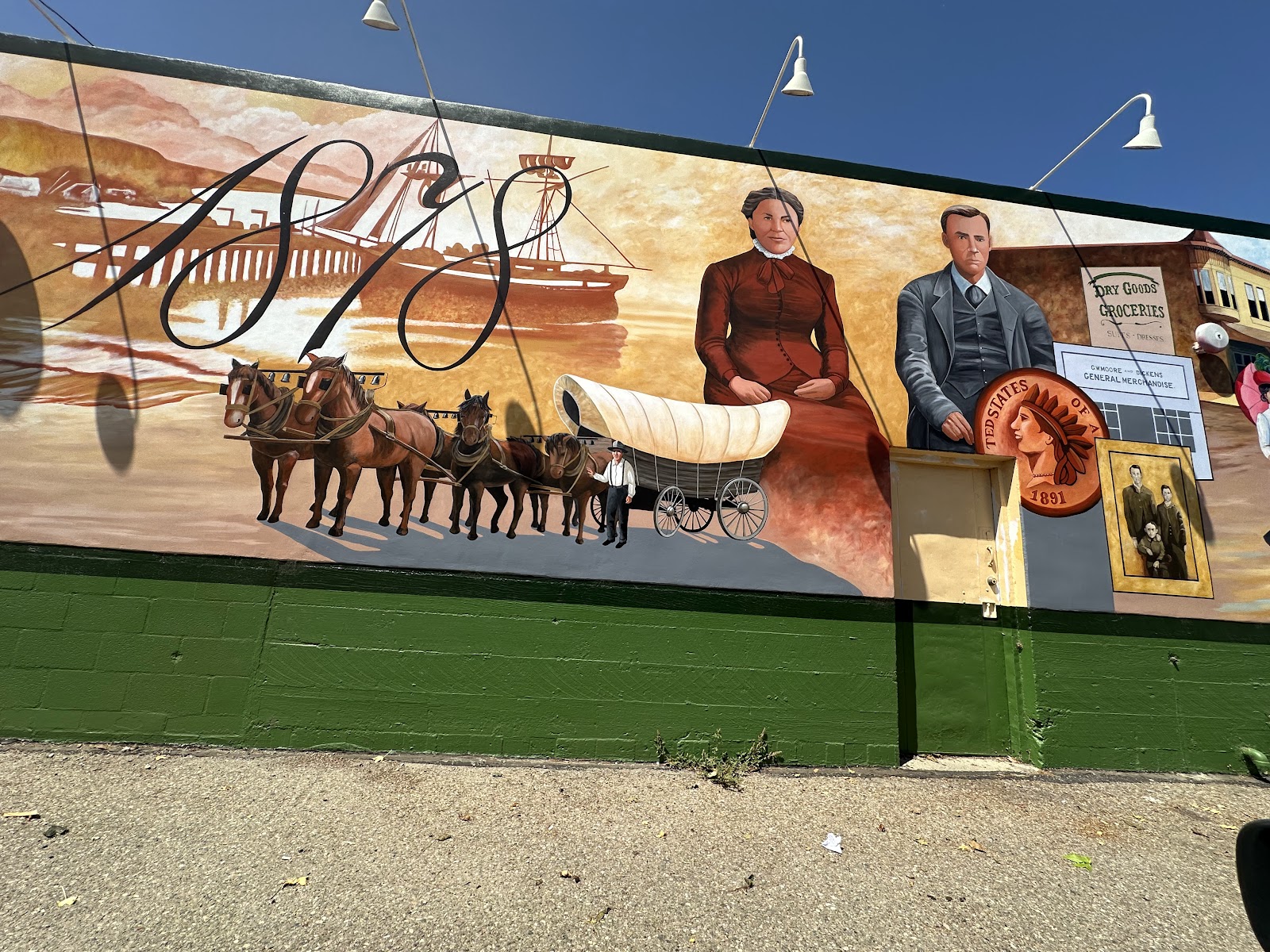

And some historic ones like this

A little unusual in the corner here


But the one that made me pause the most was this one, which is obviously about a serviceman who had died in the field.  

A United States flag is provided to drape the casket or accompany the urn of a deceased Veteran who served honorably in the U.S. Armed Forces. It is furnished to honor the memory of a Veteran's military service to their country.

Friday, September 29, 2023

Be inspired by nature

Being inspired by nature is a profound and timeless source of creativity and wisdom. Nature's intricate designs, awe-inspiring landscapes, and the delicate balance of ecosystems have sparked the imagination of artists, scientists, philosophers, and innovators throughout history.

From the graceful Fibonacci sequence found in seashells and sunflowers to the elegant engineering of bird's wings, nature's patterns and structures offer valuable lessons. They teach us about efficiency, sustainability, and adaptability. By observing nature, we can learn how to design more energy-efficient buildings, create sustainable agriculture practices, and develop innovative technologies inspired by the natural world.

Moreover, nature's beauty and serenity have a soothing effect on the human spirit. Time spent in natural settings can reduce stress, improve mental health, and promote well-being. This connection to nature fosters a sense of responsibility to protect and conserve our environment, recognizing that our well-being is intricately linked to the planet's health.

Nature has been a constant muse in art, inspiring countless masterpieces in painting, sculpture, literature, and music. The play of light on leaves, the colors of a sunset, and the intricacies of a spider's web have all been translated into works of art that capture the essence of nature's beauty and complexity.

In essence, being inspired by nature is not just about admiration; it's about learning, innovating, and coexisting harmoniously with the natural world. It encourages us to seek sustainable solutions, celebrate the wonders of our planet, and recognize that we are part of a vast and interconnected web of life. Nature's lessons are timeless, and our ability to draw inspiration from it can lead to a more harmonious and sustainable future.